
The ranch was named KL Bar, in honor of Romaine’s mother, Katherine. The brand was registered in 1909, and the ranch eventually grew to 640 acres. In 1914, the first adobe building, currently the Homestead House guest casita, was built as the ranch headquarters and bunkhouse.
In addition to ranching, Lowdermilk became a writer and Western entertainer. His writing career began with a weekly column of “wit and wisdom” for a Prescott newspaper. The column led to the ranch’s first paying guests in 1918, after Lowdermilk’s editor visited the ranch and spread the word about staying at the Kay El Bar.
In those early days, accommodations were rustic, bathrooms were communal, and there was a basic menu of the “three B’s”: beans, bacon and biscuits. Horseback riding and cowpunching were the sole amusements. There were few guests at that time, but visitors were eager to sample Western ranch life, and hosting them supplemented income when the cattle business slowed.
In 1925, Lowdermilk took a partner, Henry Warbasse, and the two of them built the large adobe lodge expressly for use as a dude ranch. The Kay El Bar Guest Ranch opened in 1926; the next year, Lowdermilk sold out to Warbasse and his wife, Christine. In 1929, Warbasse was elected the first president of the Arizona Dude and Guest Ranchers’ Association.
RANCH HISTORY
The Kay El Bar Guest Ranch has been a part of the history of Wickenburg, Arizona, for more than a century. And, like many early dude ranches, it began as a working cattle outfit. In 1909, 18-year-old Romaine Lowdermilk purchased 160 acres of Arizona ranchland for $1.25 an acre. He originally had been sent to the Southwest by his mother to cure his ill health three years earlier. He wanted to homestead his own land north of Wickenburg but was too young, so he sat on his choice acres until his 18th birthday.

Dudes ride out of the center of the Kay El Bar Ranch with the adobe lodge and Homestead House visible in the background.
For the next 45 years, the ranch experienced many changes in ownership. It operated as both a guest and cattle ranch until 1958, when then-owner Morton Bodfish, a Chicago financier and president of the International Savings and Loan Association, sold the 120 acres with the dude ranch facilities while retaining the surrounding acreage for cattle.
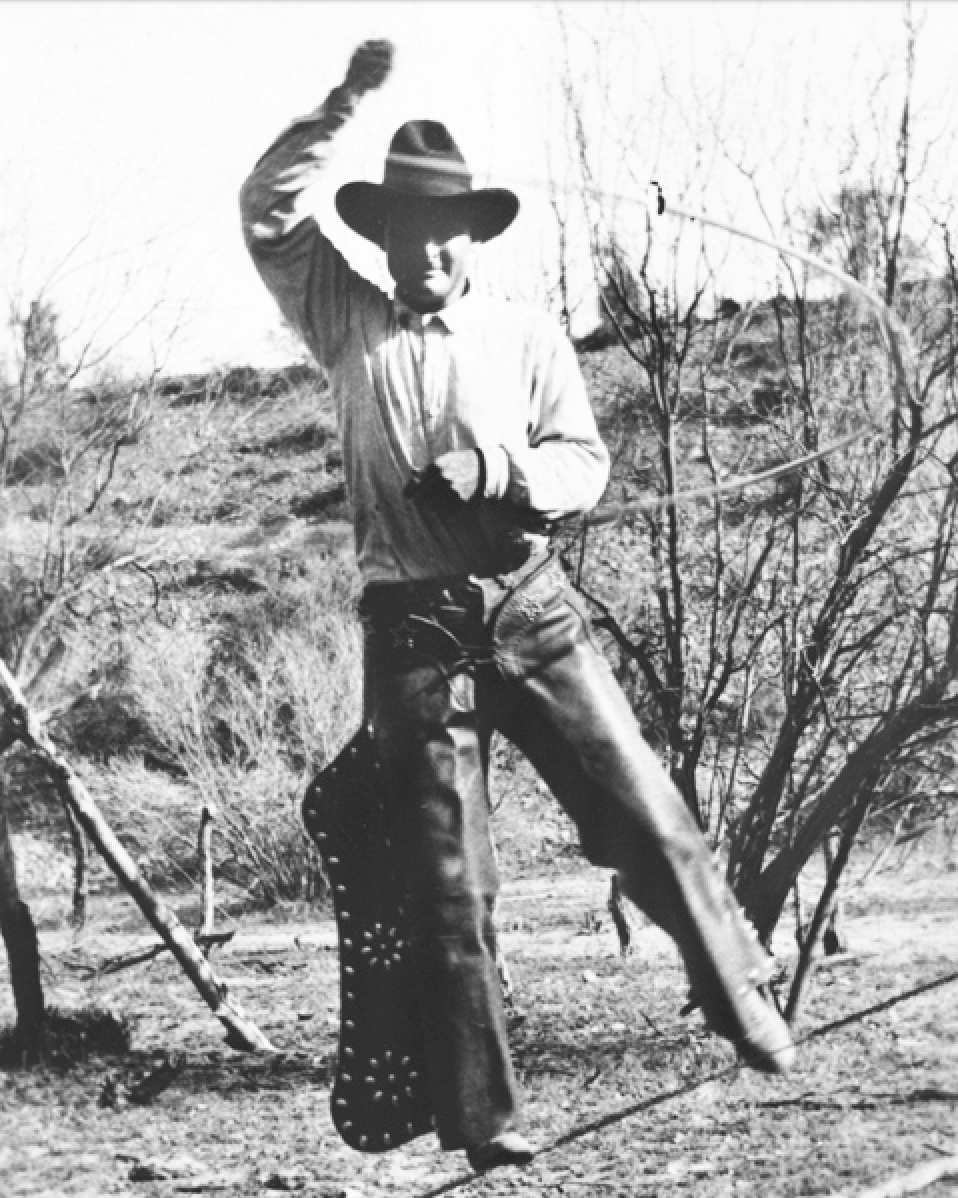
Romaine Lowdermilk, founder of the Kay El Bar, was also a writer and Western entertainer; he became known as the “Father of the Arizona Dude Ranch,” later establishing other such properties.
Robert Kratville and Eugene Kilmer bought the ranch in the late ’60s, and for some time, it was home to actor Val Kilmer. When Eugene and Gladys Kilmer divorced, the ranch was put up for sale. Then, Gladys met William Leach at a local ranch, and he later surprised her by buying the Kay El Bar from her ex-husband. After they married, the Leaches operated the property as a guest ranch until the last six years of their ownership, when they simply lived on the property.
In the 1970s, the ranch was placed on the National Register of Historic Places, along with the Arizona equivalent. In 1978, Charles and Carol Peterson took over the ranch and 60 acres of land; the other 60 were retained by the Leaches. Halfway through their second ranch season, though, the Petersons were ready to sell. Jane and Jay Nash and Jan and Charlie Martin had been looking for a ranch for the two sisters to run, and the couples fell in love with the Kay El Bar. Over the years, they spent countless hours refurbishing the ranch while managing it for 17 years.
John and Nancy Loftis bought the ranch in 1997 and ran it into the 2000s. Their guest ranch interest began after they took their own children to guest ranches in Colorado in the mid-’80s. The ranch was closed for many years until 2018, when, on its 100th anniversary of welcoming guests, the Kay El Bar resumed operation as a guest ranch. It hosts guests for an intimate Western experience as part of the True Ranch Collection, a selection of historic dude ranches across the West.
Today's guests can experience the same western ambiance as the early visitors, sleeping in adobe-walled buildings, walking among mature stately trees, and riding the same trails as those first guests from almost 100 years ago.
RANCH TIMELINE
1909
Eighteen-year-old Romaine Lowdermilk purchased 160 acres of Arizona ranchland from the U.S. Land Office for $1.25 an acre. The working cattle ranch was named KL Bar, in honor of his mother Katherine Lowdermilk. The KL Bar brand was registered this year and the ranch eventually grew to 640 acres.
1914
The first adobe building, the current Homestead House guest casita, was built as the ranch headquarters and a bunk house for the cattle wranglers. A number of adobe brick building were built over the years by the Maricopa Tribe who lived on the nearby reservation. The adobe bricks are 12 to 18 inches thick.
1918
Just nine years after Lowdermilk started the ranch, the first paying guests arrived. Kay El Bar was still a working cattle ranch then, but an enthusiastic newspaperman who had visited the ranch spread the word about the "authentic western experience" and soon paying guests started arriving.
1925
Lowdermilk took a partner, Henry Warbasse, with the goal of developing a full-time dude ranch. The first structure they built was the large adobe lodge, which is still used to house guests. The rafters of the main lodge were taken from the old El Dorado gold mine 16 miles away and brought by horses to the ranch.
1970
Romaine Lowdermilk, founder of Kay El Bar Ranch, dies at age 80. He became known as the "Father of the Arizona Dude Ranch,” first establishing Kay El Bar as a guest ranch and later starting other Arizona ranches. He had a second career as one of the first cowboy entertainers.
1975
In recognition of its contribution to the State of Arizona, and for its historical significance, Kay El Bar Ranch was placed on the State Register of Historic Places in 1975.
1979
Kay El Bar was placed on the National Register of Historic Places by the U.S. Department of the Interior in 1979.
2012
After many years as a guest ranch, Kay El Bar was converted back to a private ranch.
2018
On the 100th anniversary of welcoming the first paying guests, Kay El Bar resumes operation as a guest ranch.
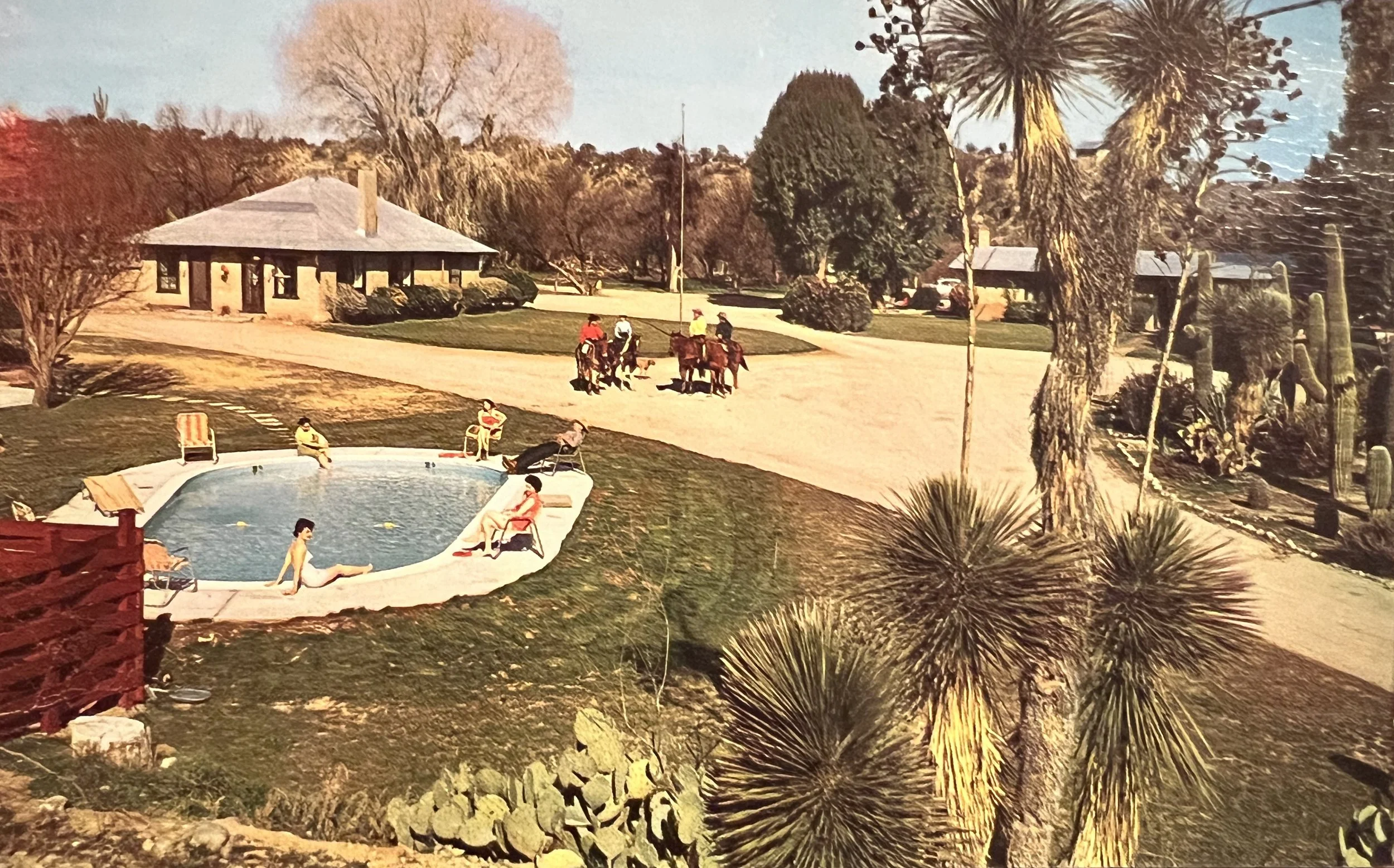
A Kay El Bar postcard, circa 1950s.
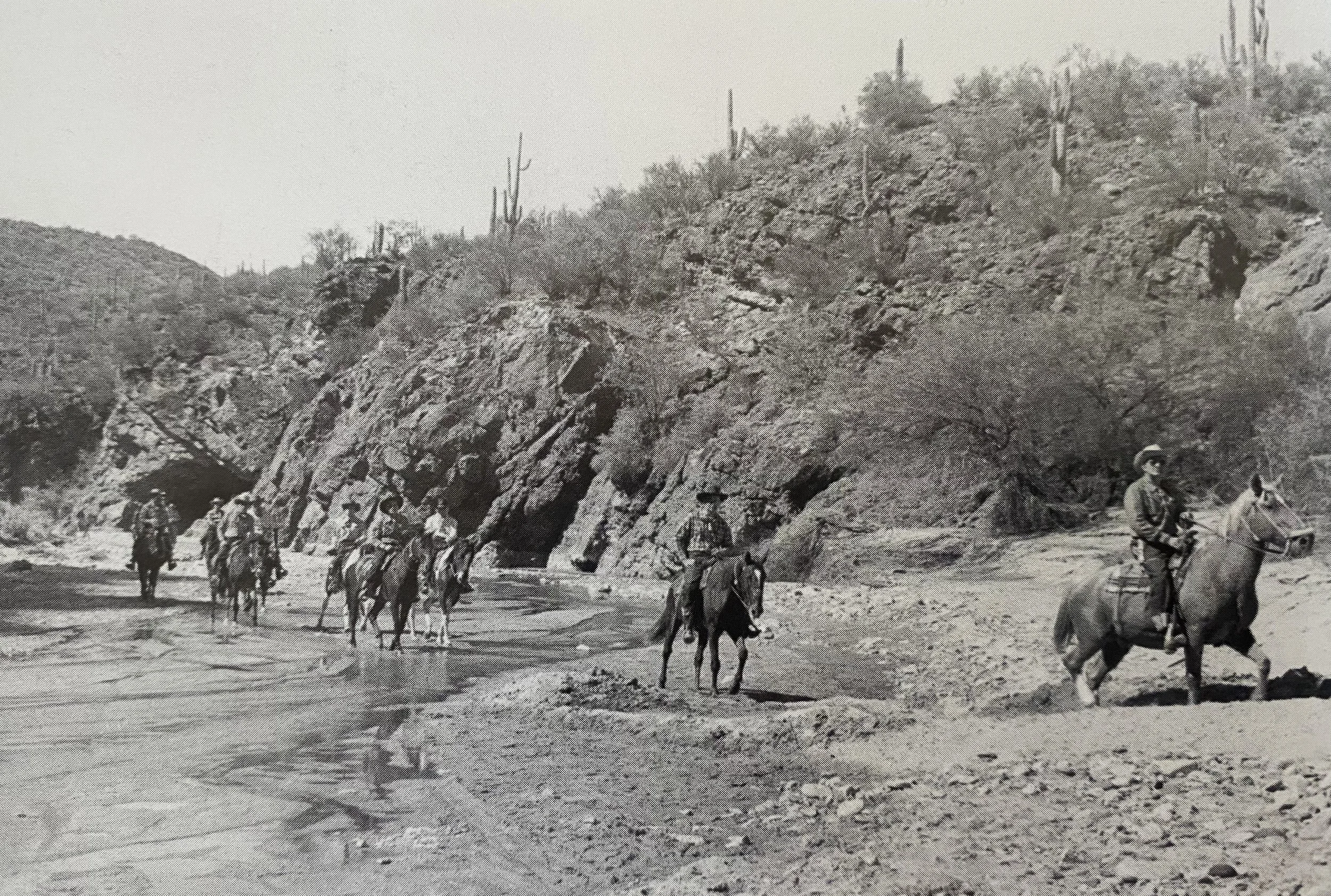
Riding through the Hassayampa River.

Founders of the historic guest ranch Kay El Bar, Romaine Lowdermilk and Henry Warbasse.
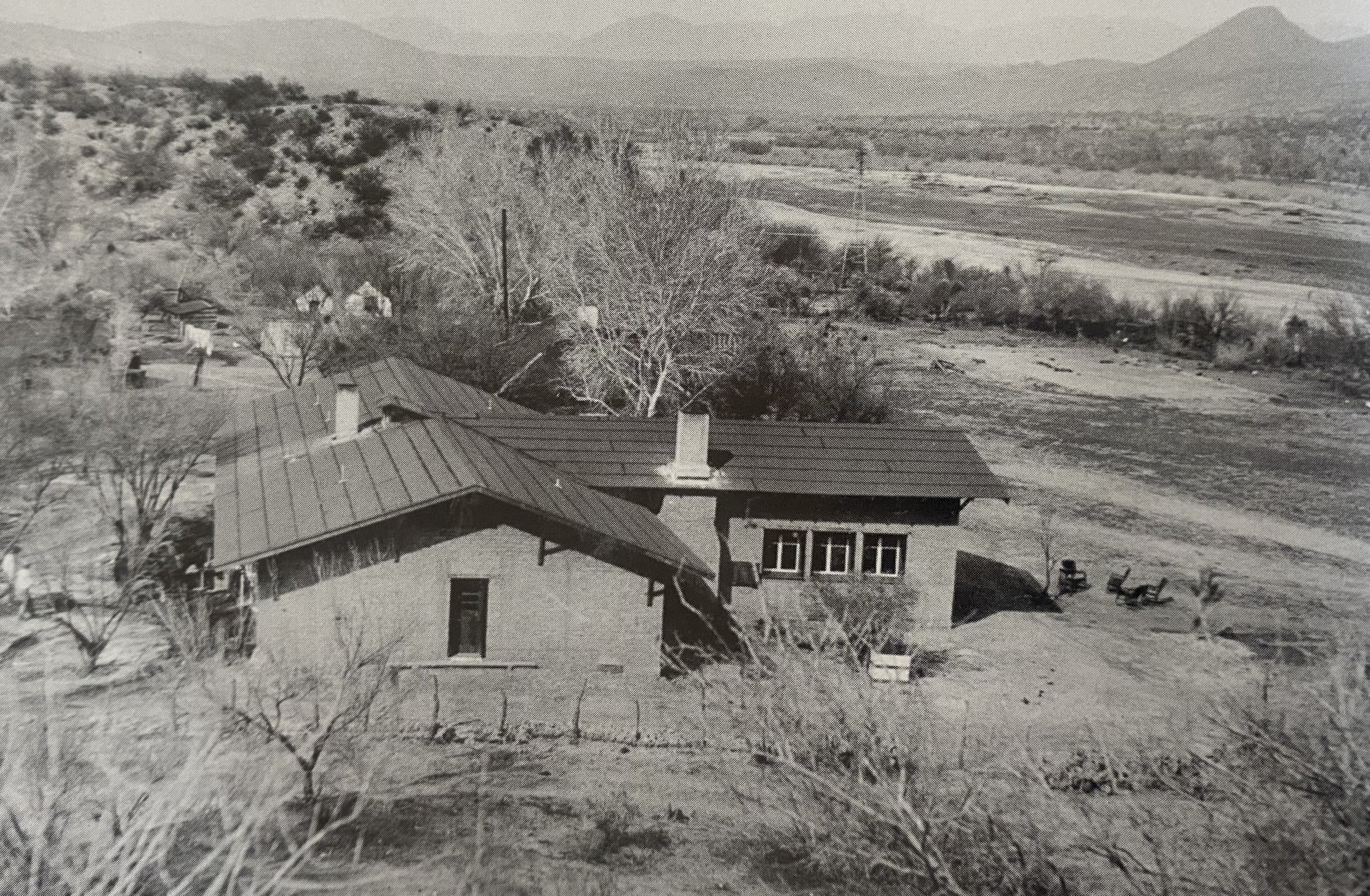
In 1925, Lowdermilk took a partner, Henry Warbasse, with the goal of developing a full-time dude ranch. The first structure they built was the large adobe lodge, which is still used to house guests. The rafters of the main lodge were taken from the old El Dorado gold mine 16 miles away and brought by horses to the ranch.
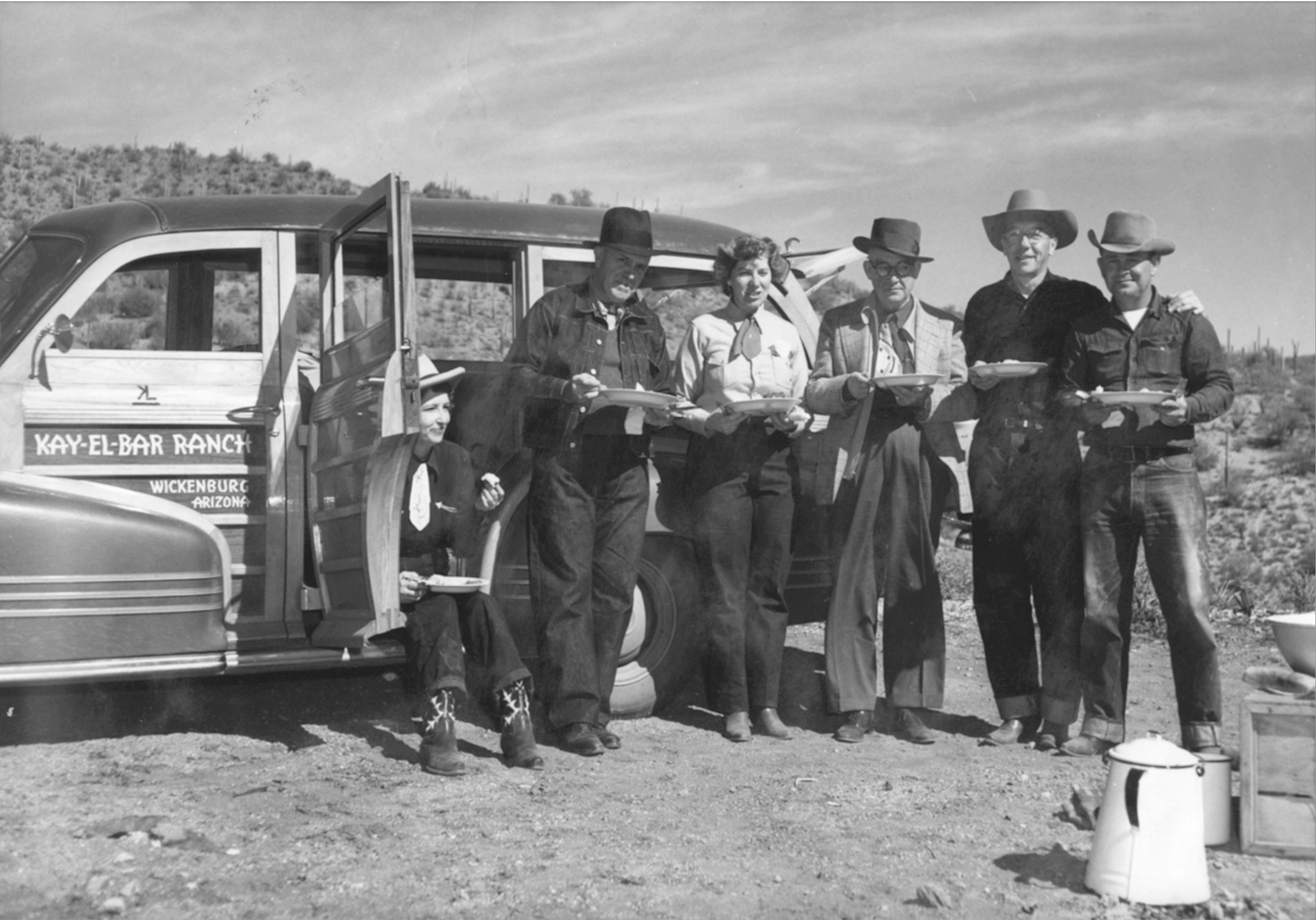
Historic Kay El Bar Guest Ranch image of guests transported to the Wickenburg, Arizona dude ranch.
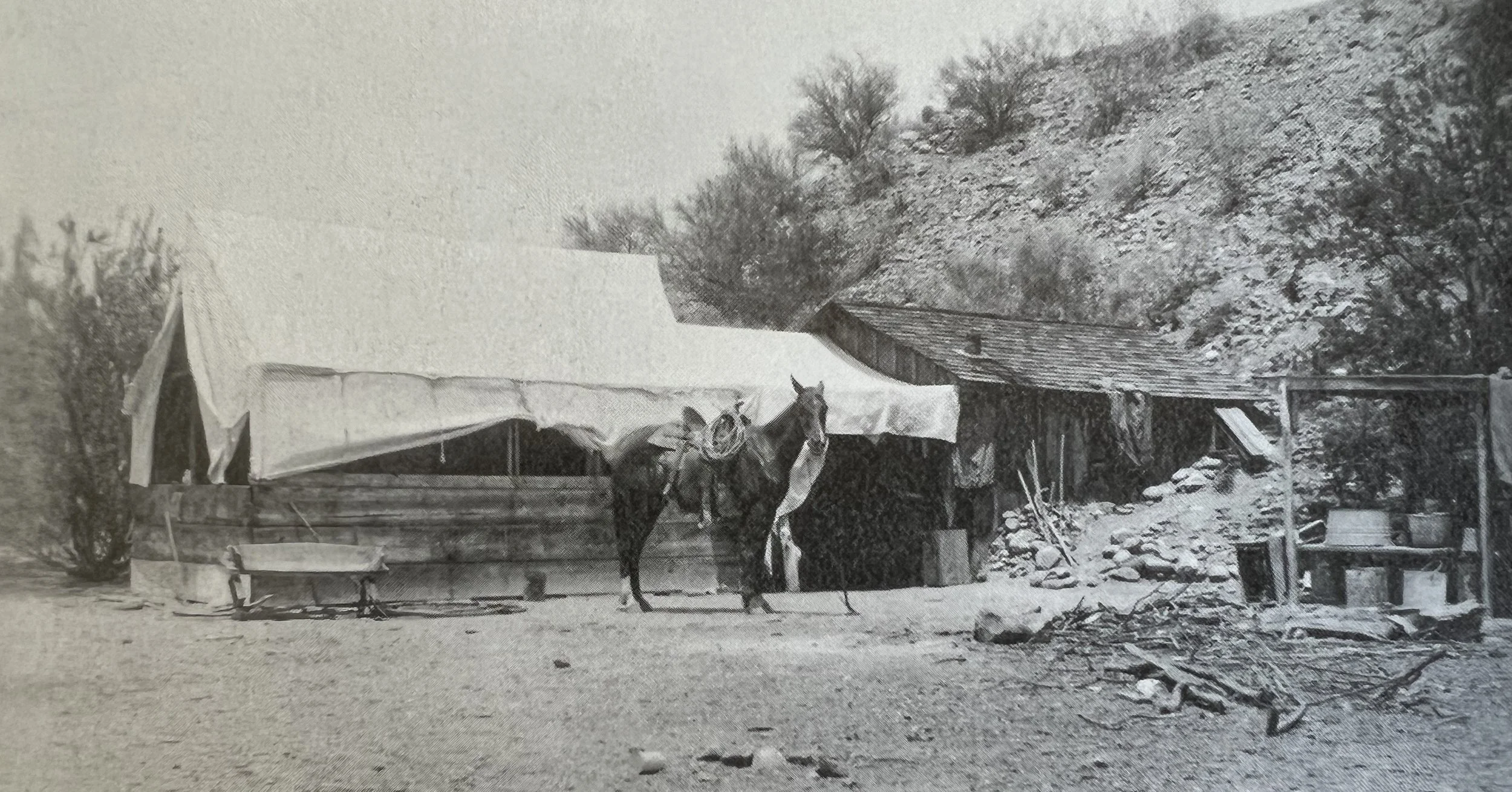
Some of the early structures at the ranch.
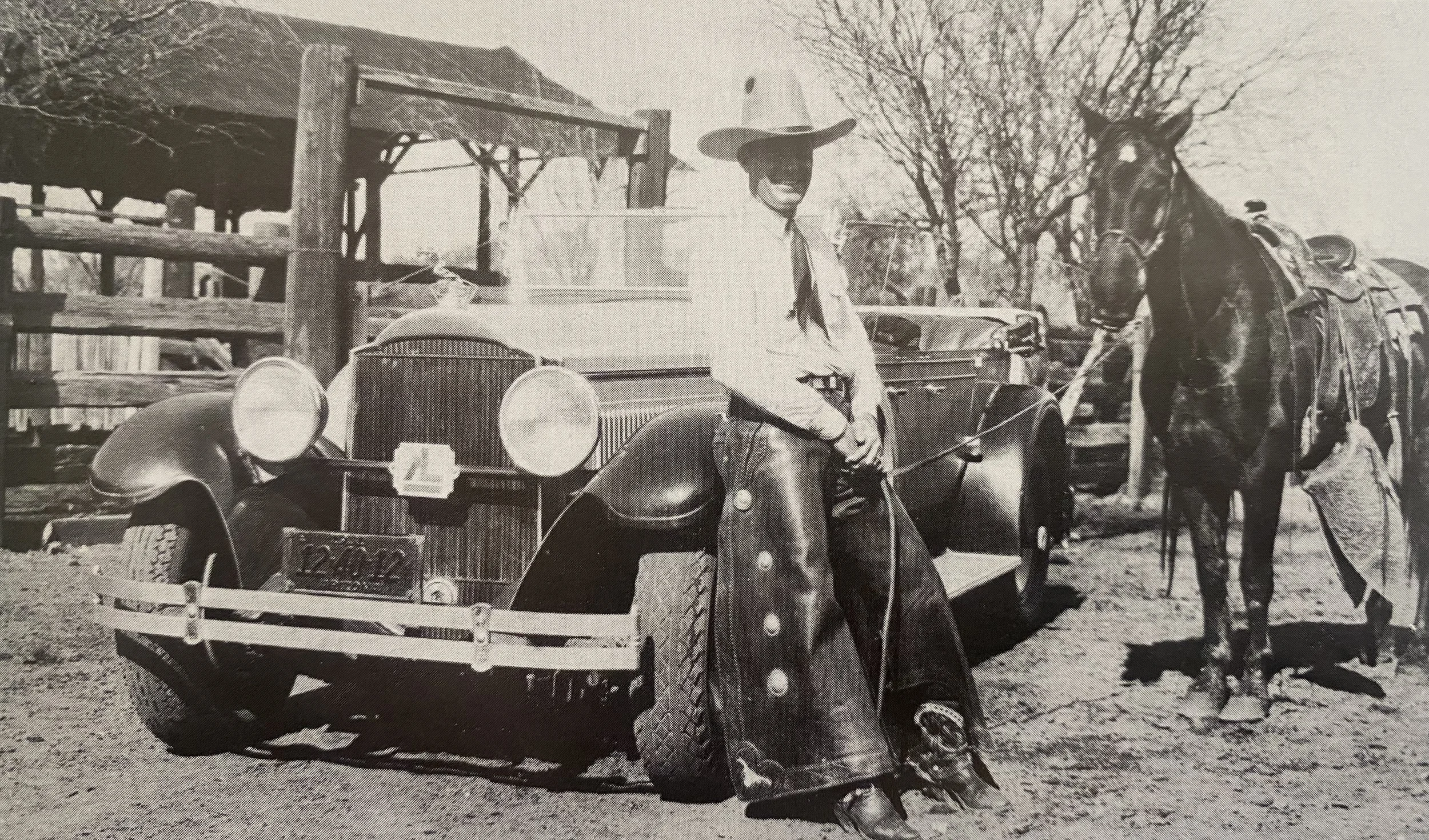
By 1931 the ranch was hosting some very high-powered guests, who usually arrived by train at the Santa Fe station in Wickenburg. They were picked up in the ranch's Packard Touring Car by ranch owner Henry Warbasse.
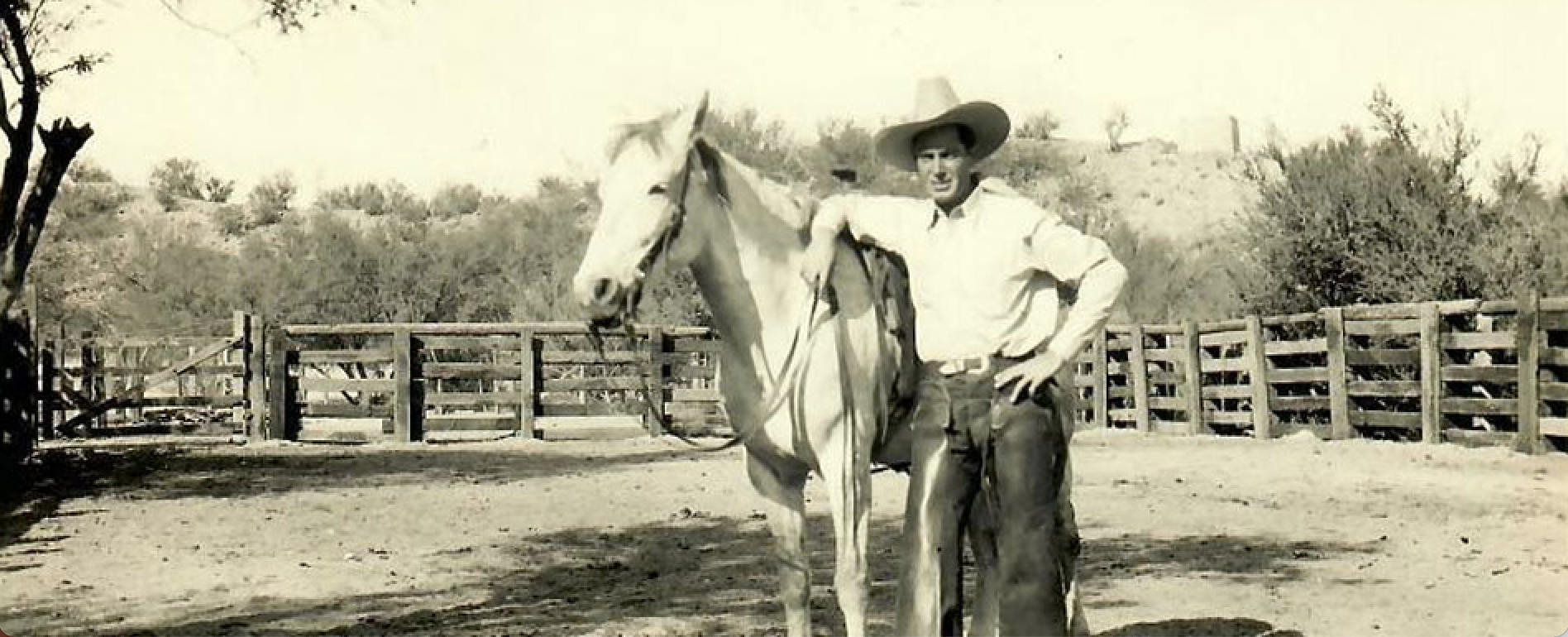
Romaine Lowdermilk, founder of the Kay El Bar.
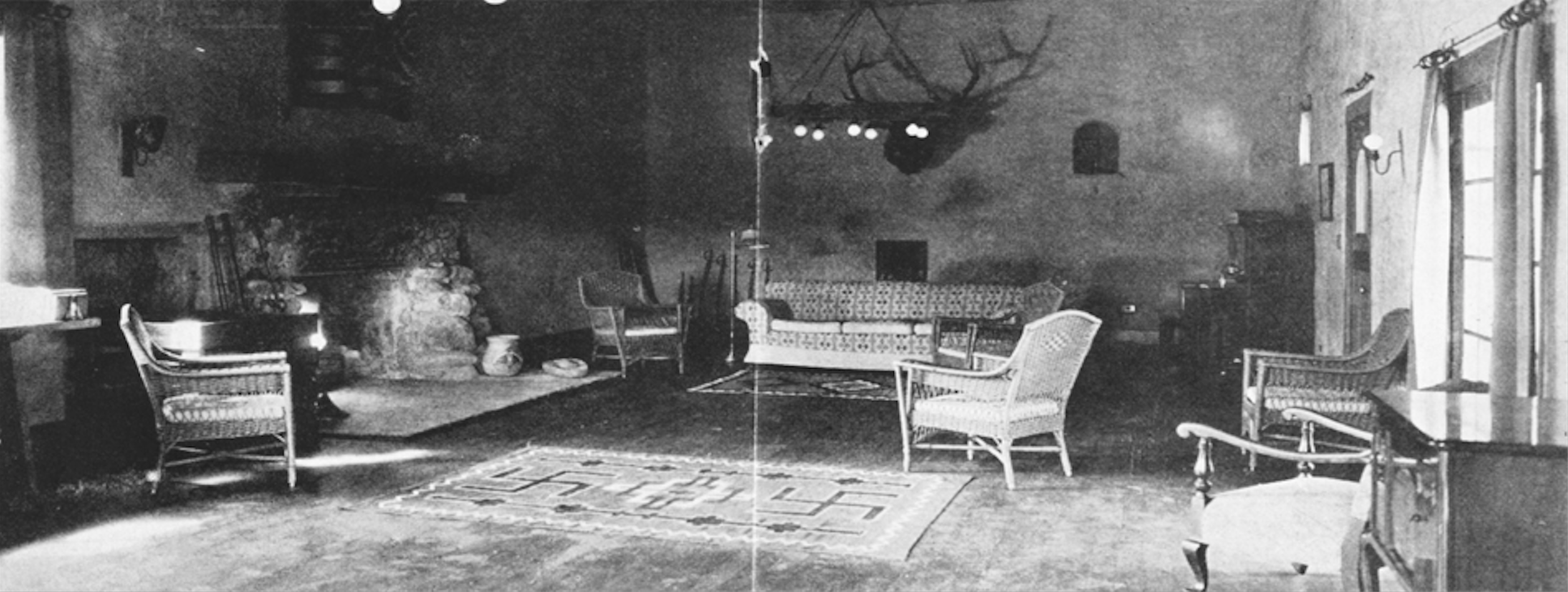
A historic image of the interior of the lodge at the Kay El Bar.
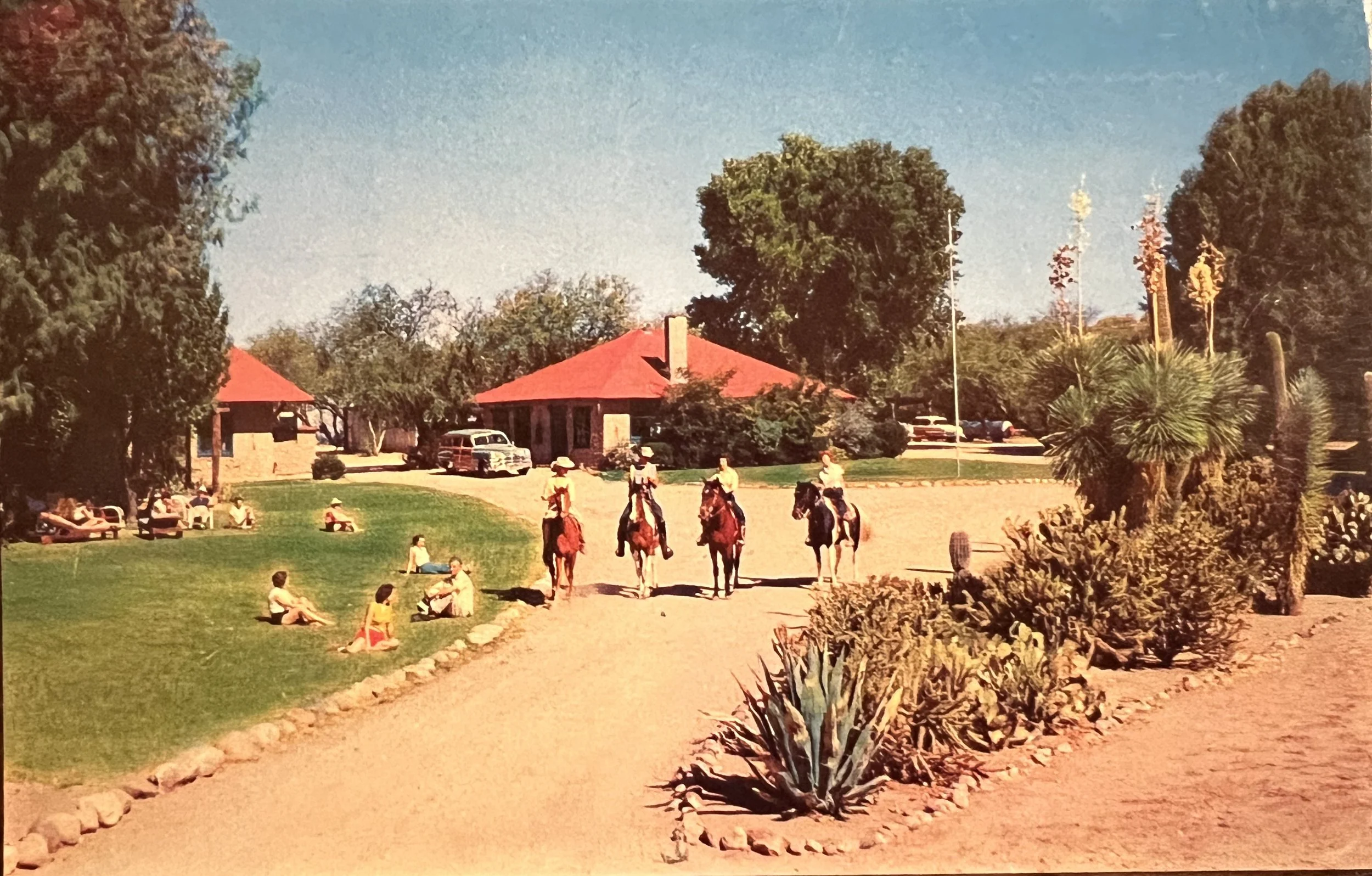
An early postcard from the Kay El Bar.
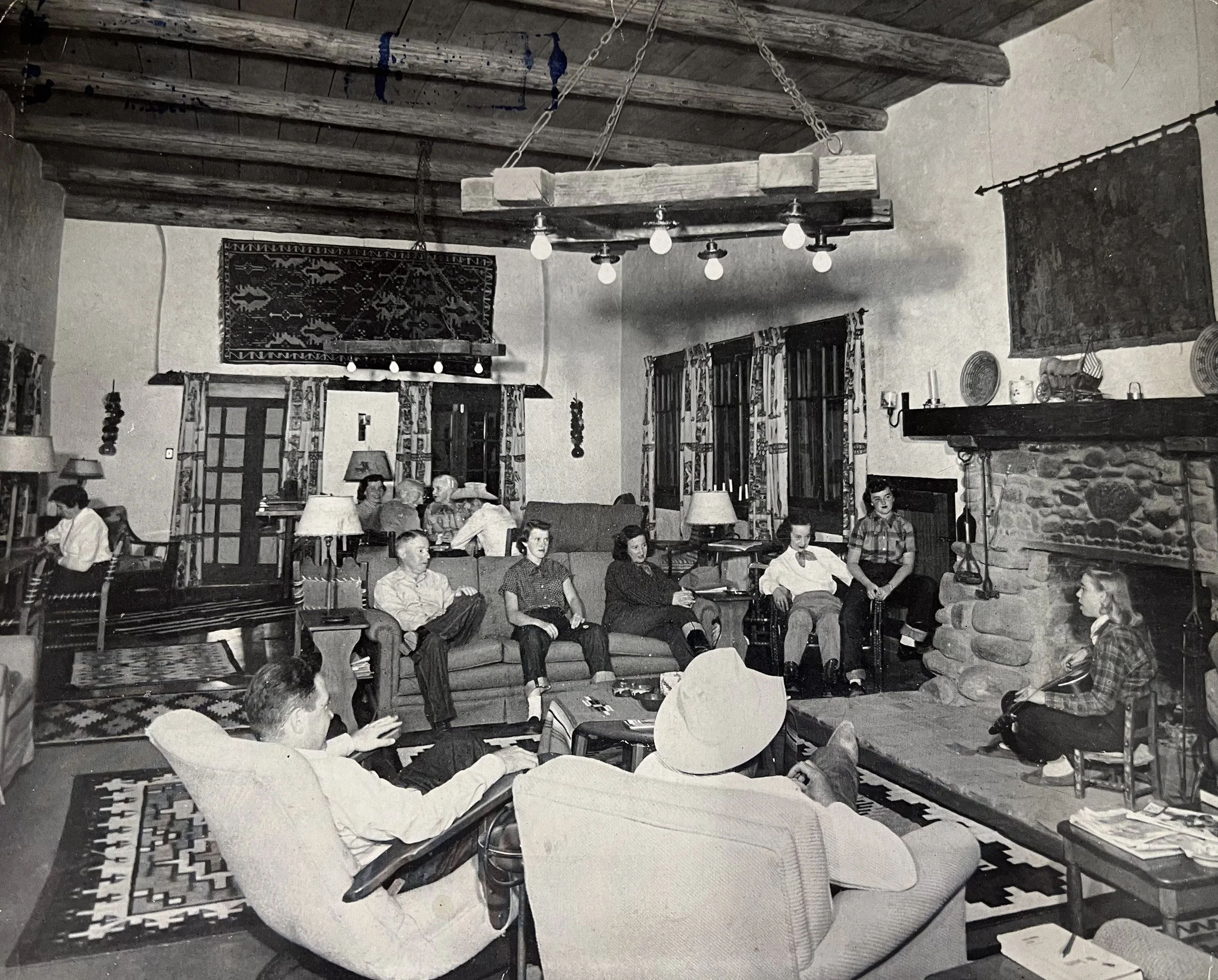
A 1950s postcard. The living room of the main lodge is beamed with the original telegraph poles that ran between Wickenburg and Phoenix. The cross ties from those poles were used to make the living room hanging chandeliers.
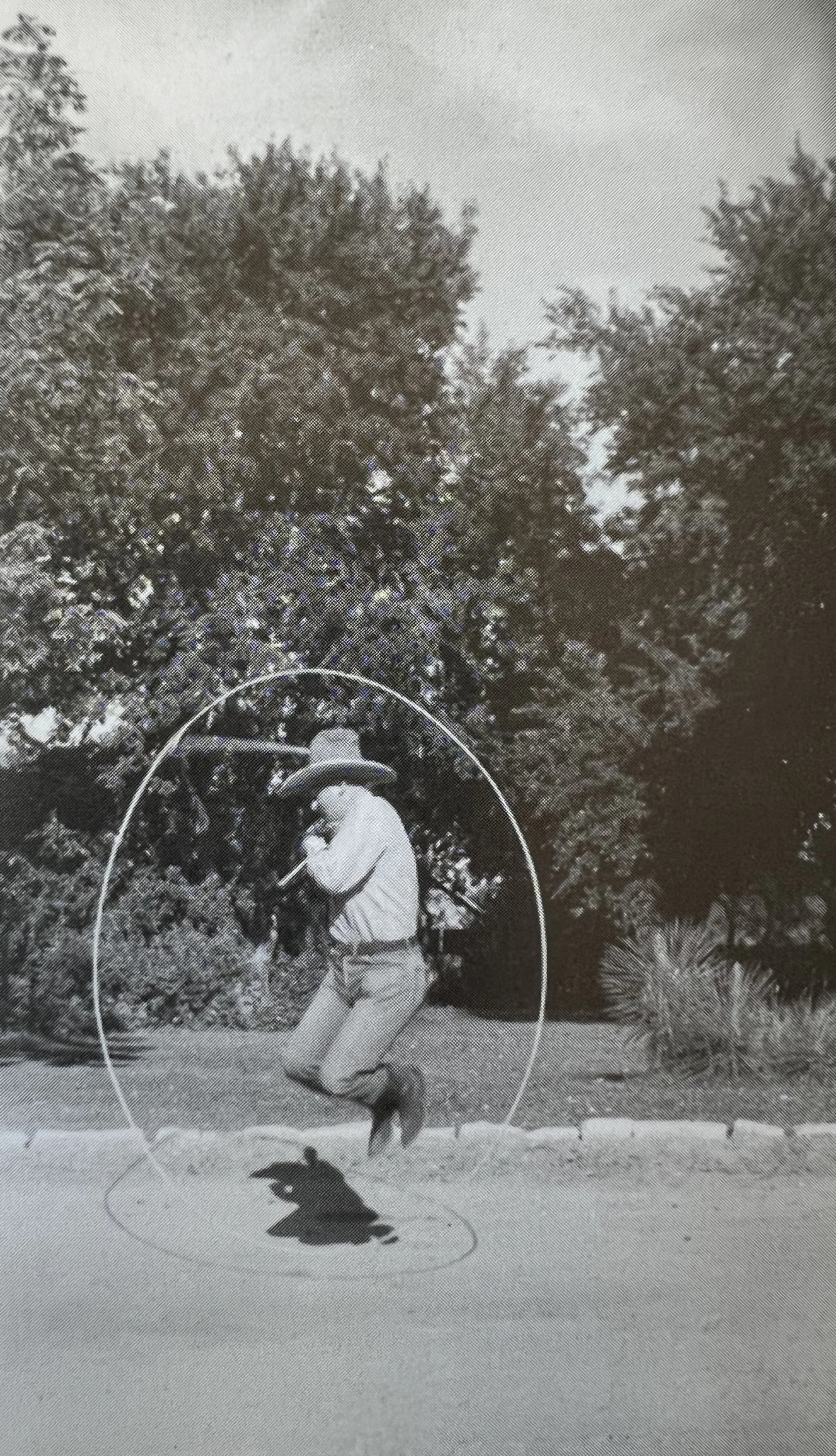
Romaine Lowdermilk, founder of the Kay El Bar, was also a writer and Western entertainer; he became known as the “Father of the Arizona Dude Ranch,” later establishing other such properties.